Official Website: http://www.ftrai.org/futuretech2013


|
|
|
|
|
|
Keynote Speaker 1
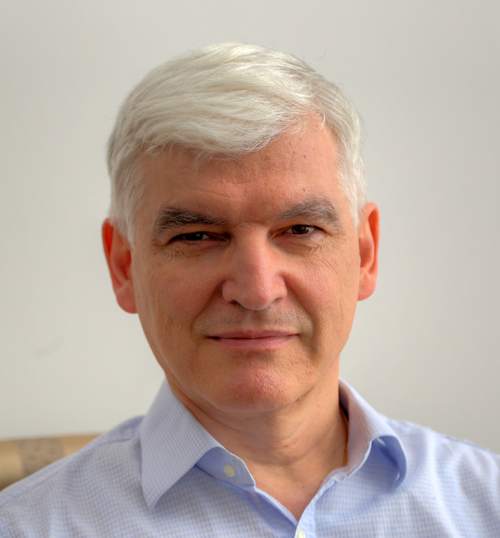
Dr. Ivan Stojmenovic
Professor
University of Ottawa, Canada
|
|
IoT/CPS: M2M communication, actuation and coordination challenges
|
|
Existing machine-to-machine (M2M) communications incorporate a central point for gathering information, making decision, and acting. Large scale cyber-physical systems (CPS) beyond M2M concept are envisioned with the distributed actuation and in-network processing. Machine-to-machine communication aspects include data dissemination, data aggregation, reporting mechanisms for monitoring, cooperative access. Other related issues that would beexplored are modeling, inter-dependency and topology control, and security and privacy. This lecture emphasizes actuation as one of important tools in the future applications of Internet of Things and Cyber Physical Systems architectures. Various existing models for wireless sensor and actuator networks are elaborated. It then concentrates on the network layer issues in wireless sensor and sensor-actuator networks. Coordination between sensors and robots, and robot to robot coordination are then covered with some concrete problem formulations. These include robot dispersion, communication aspects of robot coordination, robot task allocation, and sensor placement and relocation to improve sensing area coverage.
|
|
About Dr. Ivan Stojmenovic
|
Ivan Stojmenovic received his Ph.D. degree in mathematics in 1985. He earned a third degree prize at the International Mathematics Olympiad for high school students in 1976. He is Full Professor at the University of Ottawa, Canada. He also held regular or visiting positions in Serbia, Japan, USA, France, Spain, Brazil, Hong Kong, Taiwan, China (Distinguished Professor, Tsinghua University in Beijing and Dalian University of Technology, 2010-2), UK
(Chair in Applied Computing, EECE, University of Birmingham, 2007/8).
Stojmenovic is Fellow of the IEEE (Communications Society, class 2008), and Canadian Academy of Engineering (since 2012), and Member of the Academia Europaea (The Academy of Europe), from 2012 (section: Informatics). He was IEEE CS Distinguished Visitor 2010-11.
He received 2012 Distinguished Service Award from IEEE ComSoc Communications Software TC. He was cited >13000 times. His h-index is 56 (he is among 250 computer scientists with h≥50; top h-index in Canada for mathematics and statistics). ESI Special Topicslisted him #3 in papers, #9 in cites/paper, and #20 in total cites among all authors Wireless/Mobile Networks 1995-2005. One of his articles, on broadcasting in ad hoc wireless networks, was recognized as the Fast Breaking Paper, for October 2003 (as the only one for all of computer science), by Thomson ISI Essential Science Indicators http://esi-topics.com/fbp/fbp-october2003.html.
Google Scholar lists him as the top researcher in parallel and distributed systems by citations, and among the top ten in two more fields: wireless networks and algorithms. He received four best paper awards at conferences (IFIP PWC 2004, SENSORCOMM 2008, CSA 2009, ICA3PP 2011) and Excellence in Research Award of the University of Ottawa for 2009. He presented a number of tutorials and invited talks. He is Tsinghua 1000 Plan Distinguished Professor (2012-5). He is recipient of the Royal Society Research Merit Award, UK, 2007-8.
www.site.uottawa.ca/~ivan (contains full and medium size CVs and many articles)
|
|
Keynote Speaker 2
Dr. David Taniar
Associate Professor
Monash University, Australia
|
|
Big Data is all about data that we don't have
|
|
Big Data is now becoming a buzz word in information technology industry and research. Is Big Data only about large volume of data?, and if it is yes, why is it suddenly becoming a trend. Hasn't the growth of data volume been gigantic in the last decade? From a research point of view, it is not surprising to see researchers from all walks of computer science are trying to align their research to Big Data for the sake of being trendy. The question remains whether it tackles the real Big Data problems. In this talk, I will describe the misconceptions of Big Data, present motivating cases, and discuss the unavoidable challenges faced by industry and research.
|
|
About Dr. David Taniar
|
|
David Taniar is recognized for significant contributions in database query processing in (i) Parallel Database, and (ii) Mobile/Spatial Databases. His primary contribution is to make access pattern to these databases more efficient. He has authored two books on databases ("High Performance Parallel Database Processing and Grid Databases", Wiley 2008, and "Object-Oriented Oracle", 2006), and has received four best paper awards (from three IEEE conferences and one international journal). His list of publications can be found at the DBLP server (http://www.informatik.uni-trier.de/~ley/db/indices/a-tree/t/Taniar:David.html). He is the founding editor-in-chief of three Science Citation Index Expanded (SCI-E) journals (Mobile Information Systems, Intl. J. of Data Warehousing and Mining, and Intl. J. of Web and Grid Services), a PC chair and a General chair of a number of international conferences, and has been invited to deliver keynote speeches and tutorials at various international events. He is an Associate Professor at Monash University, Australia. Further details on his track records can be found at http://users.monash.edu/~dtaniar/.
|
|
Keynote Speaker 3
Dr. Victor Leung
Professor
University of British Columbia, Canada
|
|
Broadband Wireless Access in 3D Environment Using Fibre-connected Massively Distributed Antennas
|
|
Wireless access architectures employing femto- and pico-cell base-stations/access points can reduce power consumption and enhance wireless spectrum utilization by shortening the links and exploiting cooperative and cognitive mechanisms, but co-ordinations between base-stations or access points may incur large overheads. We present a novel architecture that exploits wireless-optical convergence for next generation broadband wireless access employing fibre-connected massively distributed antennas (BWA-FMDA). In this architecture, a large number of distributed antennas are connected via radio over fibres (RoF) to a centralized processing entity to minimize the communication overhead of system co-ordination. The coverage area of the proposed BWA-FMDA system can range from a few tens of square meters in homes and office environments, delivered via IEEE 802.11a/g/n or femto-cell hotspot solutions, to several square kilometers supporting last-mile technologies such as WiMAX, LTE, and LTE-A using pico- and micro-base-stations. This new architecture leads to many new research problems, including the fundamental performance limits of massively distributed antenna systems, improved measurement-based channel models involving massively distributed antennas, advanced radio resource management and access control schemes that approach the performance limits in realistic propagation environments, and improved opto-electronic transceivers designs for low cost active optical cables suitable for RoF applications. In this talk we demonstrate the potentials of BWA-FMDA architecture by considering its application in license-free and licensed wireless systems. We present the cognitive WLAN over fibre (CWLANoF) system, which applies the BWA-FDMA architecture in the license-free ISM band for cooperative spectrum sensing, interference avoidance/mitigation and dynamic channel assignment. In licensed bands, we demonstrate the application of BWA-FMDA to create coordinated multiple point (CoMP) operations of femto-cells in a 3D envrioment, which provides higher spectral efficiency (bps/Hz) and higher energy efficiency (bits/Joule). Simulation results and address potential research issues are presented for each scenario. We conclude with a short discussion on our current effort to develop and deploy a BWA-FMDA testbed based on commercially available equipment.
|
|
About Dr. Victor Leung
|
|
Victor C. M. Leung received the B.A.Sc. (Hons.) degree in electrical engineering from the University of British Columbia (U.B.C.) in 1977, and was awarded the APEBC Gold Medal as the head of the graduating class in the Faculty of Applied Science. He attended graduate school at U.B.C. on a Natural Sciences and Engineering Research Council Postgraduate Scholarship and completed the Ph.D. degree in electrical engineering in 1981.
From 1981 to 1987, Dr. Leung was a Senior Member of Technical Staff at MPR Teltech Ltd. in Canada, specializing in the planning, design and analysis of satellite communication systems. In 1988, he was a Lecturer in the Department of Electronics at the Chinese University of Hong Kong. He returned to U.B.C. as a faculty member in 1989, and currently holds the positions of Professor and TELUS Mobility Research Chair in Advanced Telecommunications Engineering in the Department of Electrical and Computer Engineering. He is a member of the Institute for Computing, Information and Cognitive Systems at U.B.C. He also holds adjunct/guest faculty appointments at several universities including the Hong Kong Polytechnic University and Beijing University of Posts and Telecommunications. Dr. Leung has co-authored more than 600 technical papers in international journals and conference proceedings, and several of these papers had been selected for best paper awards. His research interests are in the broad areas of wireless networks and mobile systems.
Dr. Leung is a registered professional engineer in the Province of British Columbia, Canada. He is a Fellow of IEEE, a Fellow of the Engineering Institute of Canada, and a Fellow of the Canadian Academy of Engineering. He was a Distinguished Lecturer of the IEEE Communications Society. He is serving on the editorial boards of the IEEE Transactions on Computers, IEEE Wireless Communications Letters, Computer Communications, as well as several other journals. Previously, he has served on the editorial boards of the IEEE Journal on Selected Areas in Communications – Wireless Communications Series, the IEEE Transactions on Wireless Communications, the IEEE Transactions on Vehicular Technology, and the Journal of Communications and Networks. He has guest-edited many journal special issues, and served on the organizing committees and technical program committees of numerous international conferences. He is a recipient of an IEEE Vancouver Section Centennial Award and a 20112 UBC Killam Research Prize.
|
|
|
|
|
|
|