
Invited Speakers
|
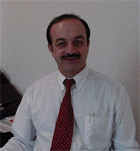
Habib F. Rashvand, Ph.DEditor-in-Chief, IET & Director of Adv. Coms School of Engineering, University of Warwick Coventry, CV4 7AL United Kingdom |
About Professor Habib F. Rashvand |
|
|
Habib F. Rashvand received his B.Sc. in 1969 and post-graduate qualifications in 1970 from the University of Tehran. He was selected for a training mission as the head of division for development of a new Telecom Research Centre as under a new cooperation project between the Iranian PTT and Japanese Industries including the NTT, KTT following his Doctorate at the University of Kent in 1980. Since then he earned a rich blend of industrial research and development positions with industries in collaboration with many universities including University of Southampton, University of Reading, Portsmouth University, Warwick University and Coventry University. His academic positions compiles University of Tehran, University of Zambia, Coventry University, Magdeburg University and University of Warwick. His Professorship in Networks, Systems & Protocols applied in 1998 to the German Ministry of Education succeeded in 2001. Since 2004 he headed a Special Academic Quality Research Operation under Directorship of Advanced Communication Systems which involves ITU, CTO, WHO, IEEE/IEE/IET. He was the editor-in-chief, member of editorial board and invited speaker for many research journals and conferences. | |
Distributed Intelligence - Convergence, divergence and ubiquitous access for future technological developments |
|
|
Innovation, as a systematic use of technological development, requires a proper deployment of the process. Some believe the process of innovation started with the European renaissance coming into effect by the use of steam engine following the long awaited Leonardo De Vinci's superior inventive designs. The impact then triggered a pattern of effects with wider implications onto various aspects of new industrial life, often referred to as the first technological revolution. At that time we had a simple development system and full control over all aspects of our technological development where the positive effects of new ideas were much greater than any possible side-effects. This progressive approach encouraged industrial nations to take on newer challenges. Then the follow up inventions over another century for innovative achievements lead to the second technological revolution featuring two industrial flagships of chemistry and electricity. Since then another century has past many philosophers and technocrats are looking for signs to mark the third technological revolution. This expectation is also encouraged by Kondratiev cycles whose collected data demonstrated some-fifty year cycles of global economy and innovation superimposing feature. This technological revolution, however, has come under critical analysis, debates and scrutiny. As time goes on three different views are diverging steadily: (a) those who believe we have already achieved it; (b) those who are waiting to see greater changes to come and (c) those who believe its failure, argued, 'it failed to find a place to land'! |
|
|
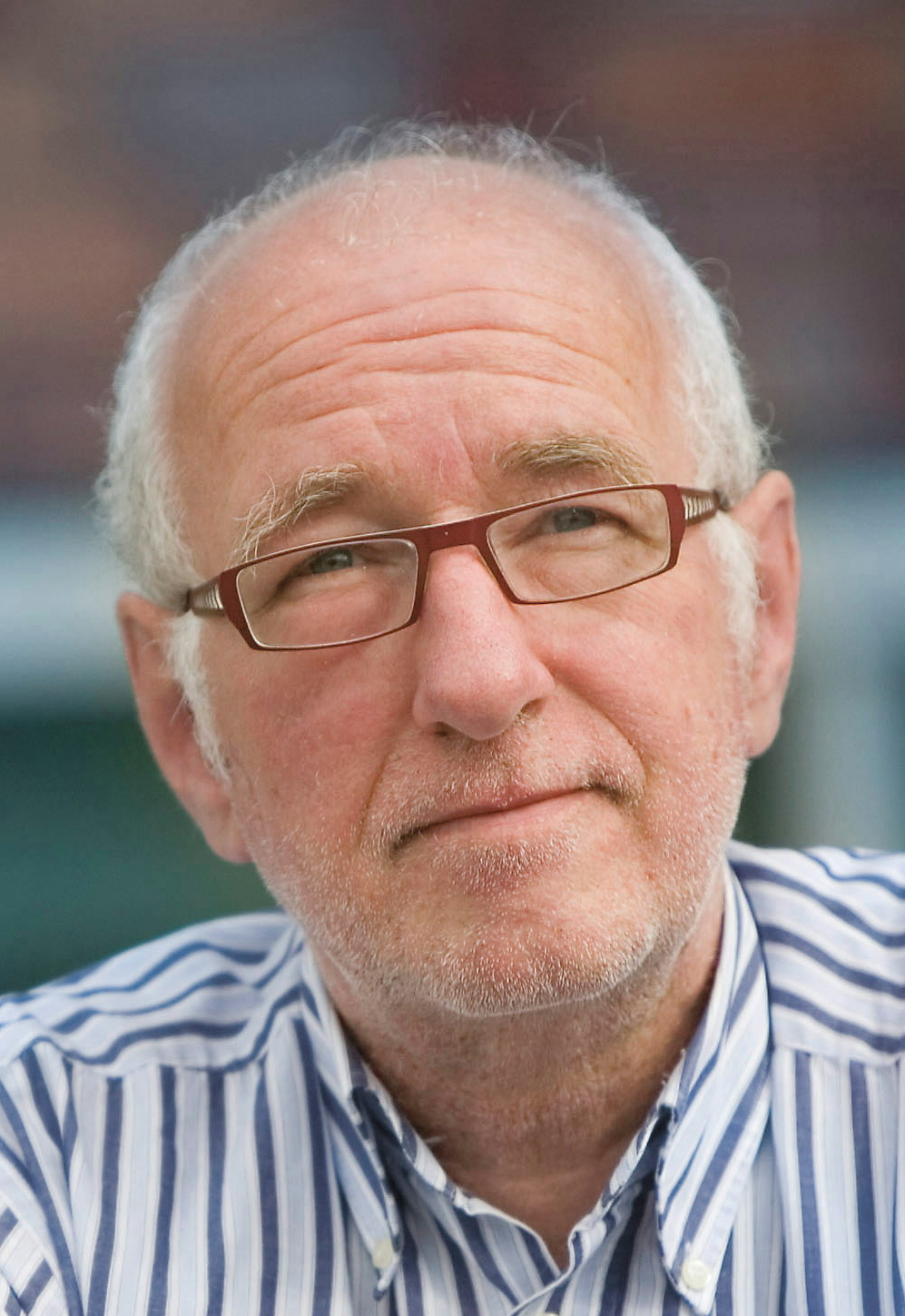
J.C. (Hans) van Vliet, Ph.DDepartment of Information Management and Software Engineering (IMSE) Vrije Universiteit De Boelelaan 1081a Room T4.38 1081 HV Amsterdam, The Netherlands |
About Professor J.C. (Hans) van Vliet |
|
|
Hans van Vliet is Professor in Software Engineering at the VU University Amsterdam, the Netherlands, since 1986. He got his PhD from the University of Amsterdam. His research interests include software architecture and empirical software engineering. Before joining the VU University, he worked as a researcher at the Centrum voor Wiskunde en Informatica (CWI, Amsterdam). He spent a year as a visiting researcher at the IBM Almaden Research Center in San Jose, California. He co-authored over 140 refereed articles. He is the author of "Software Engineering: Principles and Practice", Wiley (3rd Edition, 2008). He is a member of IFIP Working Group 2.10 on Software Architecture, and the Editor in Chief of the Journal of Systems and Software. His main research interests are in software architecture and quantitative aspects of software engineering. He was program co-chair of the Second Working IEEE/IFIP Conference on Software Architecture, held in Amsterdam, August 28-31, 2001 (WICSA2001). He is the general chair of the ESEC/FSE conference on Software Engineering, that will take place in Amsterdam, August 2009. He is the Editor in Chief of the Journal of Systems and Software. | |
Coordination in Agile Product Line Development |
|
|
In an agile software product line development environment, one runs the risk that coordination and communication is less optimal. Knowledge sharing between participants may be problematic because of incomplete or outdated documentation. Reuse may be suboptimal because one does not have sufficient knowledge of what is developed for other products. As one possible means to mitigate this, we are experimenting with the use of semantic wikis. Both the coordination issues we encountered in a large multisite development organization, and our experiences with the use of semantic wikis to mitigate those issues in such an environment will be discussed. |
|
|
Peter Sloot, Ph.DFull Professor of Computational Science Scientific Director of the Informatics Institute Editor in Chief: JoCS & FGCS Science Park 904 1098 XH Amsterdam The Netherlands |
About Professor Peter Sloot |
|
|
Education: M.Sc. Chemistry (1983), M.Sc. Physics (1983), PhD Computer Science (1988). Research interests: He tries to understand how nature processes information. He studies this 'natural information processing' in complex systems by computational modeling and simulation as well as through formal methods. His work is applied to a large variety of applications with a focus on -but not limited to Biomedicine. Recent work is on modeling the virology and epidemiology of infectious diseases, notably HIV, through Complex Networks and Cellular Automata. Recently in His work He tries to build bridges to socio-dynamics. Currently He leads two large EU projects: ViroLab and DynaNets and supervise research from various NIH, NSF and NWO and Royal Academy projects. Honors and awards: Visiting Professor Santa Fe Institute on Complex Systems (1995), NNV Distinguished Professor Computational Physics (1996). Visiting Professor (1996, ITB Bandung, Indonesia), IEEE selected member TFCC (2005 -). Visiting professor (Griffith University, Brisbane, Australia, 2005). Visiting Professor NTU (Singapore, 2009), WorldComp 2009 award (Las Vegas, 2009), I/O-award Dutch Science Foundation (Twente, 2009, NL), Leading Scientist Award
Publications and disseminations: Published over 430 papers, books and edited volumes. He has given over 20 Radio and TV interviews on various scientific results, including two documentaries on his work. Homepage: http://staff.science.uva.nl/~sloot/ | |
eScience: The road to true multidisciplinary research |
|
|
All the really relevant questions science and society is facing are multidisciplinary by nature. Strange enough the way we do science is still mainly mono-disciplinary. It is time for a change. |
|